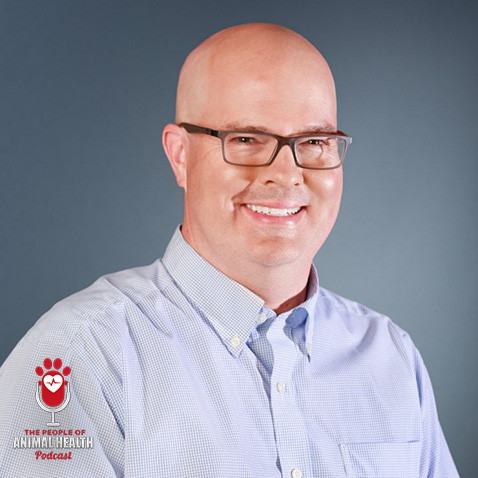
Few careers in Animal Health illustrate the value of embracing change quite like that of Dr. Michael Lucroy. Over the course of more than three decades, he has successfully navigated private practice, academia, corporate Animal Health, specialty hospitals, and biotechnology, continually finding new ways to apply his expertise while never losing sight of the patients and families that first inspired him to become a veterinarian. Whether treating cancer patients in referral hospitals, conducting research in university settings, evaluating emerging technologies for one of the industry’s largest companies, or helping develop innovative immunotherapies at Torigen Pharmaceuticals, Dr. Lucroy has consistently demonstrated that some of the most rewarding careers are built by remaining curious, adaptable, and willing to say yes when unexpected opportunities arise.
During his appearance on The People of Animal Health Podcast with host Stacy Pursell, Dr. Lucroy reflected on a professional journey that has carried him from Mississippi to California, from the frozen Canadian prairie to humid Central Florida, and eventually into the rapidly evolving Animal Health industry. Along the way, he has experienced academic setbacks, celebrated professional milestones, reinvented himself several times, and discovered that success often depends less on following a predetermined path than on recognizing opportunities when they unexpectedly appear. Throughout the conversation, one message emerged repeatedly. Careers are rarely linear, but with perseverance, intellectual curiosity, and a willingness to keep learning, they can become far more fulfilling than originally imagined.
Choosing Between Music and Veterinary Medicine
Although Dr. Michael Lucroy was born in Mississippi, his family relocated when he was about ten years old, and he spent most of his formative years in Bloomington, Indiana. Growing up in a college town shaped by Indiana University exposed him to an environment rich with academic opportunity, cultural experiences, and intellectual curiosity, all of which left a lasting impression. “It was a fun place,” Lucroy recalled, noting that having a Big Ten university in town meant “certainly lots of things to do.” Even so, despite the academic atmosphere surrounding him, Veterinary medicine was not always the obvious direction for his future.
As high school graduation approached, Dr. Lucroy found himself weighing two very different passions. One was music, which had become an important part of his life. The other was Veterinary medicine, a profession he had come to know through firsthand experience. “It was actually a toss-up between going to music school or going to veterinary school,” he said. Like many future veterinarians, his introduction to the profession began in a kennel. The local Veterinary hospital that cared for his family’s dog hired him while he was still in high school, and every day he rode his bicycle to work, cleaning cages, caring for boarded animals, and gradually learning how the hospital functioned behind the scenes. “I worked in the kennel there and rode my bicycle to work during high school,” Lucroy recalled.
Eventually, he bought a car, making the commute considerably easier, but his enthusiasm for the work remained unchanged. The more time he spent inside the practice, the more he appreciated the combination of medicine, science, and relationships that defined the profession. What had once been a difficult choice slowly became much clearer. “After spending time in the practice, I decided that music would be a vocation and veterinary medicine would really be the thing to do,” he explained. Although music would always remain an important personal interest, Veterinary medicine offered the opportunity to build a career centered on solving problems, helping animals, and supporting the people who cared for them.
That decision ultimately led him to nearby Purdue University, where practical considerations influenced his choice almost as much as the school’s reputation. “Even in those days I was sensitive about tuition prices,” Lucroy said with a smile, acknowledging that affordability played a meaningful role in his decision. After completing his undergraduate studies in Animal Sciences, he earned admission to Purdue’s College of Veterinary Medicine after only three years of undergraduate work. His class also happened to become the first to experience Purdue’s newly developed clinical tracking curriculum, allowing students to focus earlier on specific disciplines within Veterinary medicine.
For Dr. Lucroy, choosing a concentration required very little deliberation. Small animal medicine and surgery immediately appealed to him, and he devoted himself fully to that path. “I concentrated all my efforts in small animal medicine and surgery,” he said. Looking back, he recognizes that early specialization as an important foundation for everything that followed, even though he still had little idea where his career would ultimately take him. At that point, he simply knew he wanted to become the best clinician he could be.
Learning Medicine in One of North America’s Coldest Places
Following Veterinary school, Dr. Lucroy made a decision that dramatically expanded both his clinical experience and his appreciation for just how cold a North American winter could become. He accepted a small animal medicine and surgery internship at the University of Saskatchewan’s Western College of Veterinary Medicine, trading Indiana for one of the coldest regions on the continent. During his conversation with Stacy Pursell, she joked about Saskatchewan’s legendary winters, and Lucroy enthusiastically confirmed the reputation. “It clearly was a cold place,” he said.
One particular winter has remained unforgettable throughout his career. “We had an entire month where the daytime temperature never reached more than minus forty centigrade,” Lucroy recalled. Residents even developed their own humorous way of describing the calendar. “There were seasons in Saskatchewan,” he said with a laugh. “Early winter, midwinter, late winter, and next winter.” While the weather often challenged newcomers, the professional opportunities more than compensated for the harsh climate.
The teaching hospital served as the only emergency Veterinary facility for a metropolitan area of approximately 200,000 people. “They were the only emergency clinic in town,” Lucroy explained, meaning virtually every type of emergency eventually arrived at the hospital’s doors. Trauma cases, complicated medical conditions, surgical emergencies, and difficult referral patients flowed steadily through the service, exposing interns to an extraordinary variety of clinical situations. “It was a tremendous variation in caseload,” he recalled, emphasizing how rapidly the experience accelerated his growth as a young veterinarian.
Just as importantly, the internship clarified something about his long term professional goals. Although he respected general practice and the important role it plays within Veterinary medicine, he realized it did not fully satisfy his intellectual curiosity. “I recognized early on that I wasn’t going to be happy necessarily repeating the flea talk and heartworm prevention talk,” Lucroy admitted. Instead, he found himself increasingly drawn toward solving particularly challenging medical problems and developing deep expertise within a specialty discipline. By the conclusion of his internship, he knew residency training represented the logical next step. The only remaining question involved deciding which specialty best matched both his interests and his personality.
Discovering a Passion for Oncology
Among the many specialty disciplines available, oncology consistently captured Dr. Lucroy’s attention. Unlike fields focused primarily upon procedures or isolated diseases, cancer medicine allowed veterinarians to develop long term relationships with both patients and their families while managing complex illnesses that required continual adaptation and thoughtful communication. “I really liked working with cancer patients,” Lucroy said. “It has those aspects where you can really form bonds with clients and get to know them over time.”
Matching into the medical oncology residency at the University of California, Davis marked another pivotal milestone in his career. “So I packed up the moving truck and drove further west,” he recalled. The residency itself proved exceptionally demanding. At the time, the program consisted of two years devoted almost entirely to clinical responsibilities, leaving residents with very little time away from patient care. “You get pretty much no time off clinics,” Lucroy explained. Rather than discouraging him, however, the relentless pace accelerated both his learning and his confidence. “We were able to see tons of cases a day,” he said, noting that every patient represented another opportunity to improve his diagnostic skills, treatment planning, and communication with clients. “It made for great learning experiences.”
Following completion of his residency, Dr. Lucroy remained at UC Davis to pursue graduate studies in Comparative Pathology while conducting research through the Center for Companion Animal Health. At first, he envisioned continuing toward a PhD, believing that advanced research would complement his growing clinical expertise. Life, however, introduced another important priority. “My daughter was born during that time,” he recalled. Balancing graduate school, residency level finances, and raising a young family in California quickly became more challenging than he had anticipated. “It’s awfully expensive to try and raise a kid in California,” Lucroy said. Faced with those realities, he made another important career decision, choosing to leave graduate school and enter specialty practice. Once again, circumstances redirected his plans in ways he never could have predicted.
Building a Career Through Practice and Academia
Leaving California brought Dr. Lucroy and his family to another warm climate, this time in Central Florida. Compared with Saskatchewan, the weather represented a dramatic improvement, although he quickly discovered that heat brought its own challenges. “We didn’t do our due diligence there,” he joked. “It’s awfully humid in the Orlando area.”
Although he enjoyed specialty practice, another opportunity soon emerged involving laser research and photodynamic therapy, projects he had begun while still in graduate school. Accepting a faculty position at Oklahoma State University allowed him to continue both clinical oncology and research simultaneously. “It was an opportunity to continue some laser research,” Lucroy explained. The position also introduced him to academic medicine, where teaching, research, and clinical practice combined into a uniquely rewarding professional environment.
Another unexpected opportunity arrived when Purdue University contacted him about returning to his alma mater as a faculty oncologist. At nearly the same time, his father-in-law received a diagnosis of Alzheimer’s disease, making proximity to family increasingly important. “It was a chance for us to be a little closer to family,” Lucroy said. Returning to Purdue felt like the right professional and personal decision, allowing him to continue advancing his academic career while spending more time with those closest to him.
Over the following years, he served as Associate Professor and Chief of Clinical Oncology, publishing research, mentoring Veterinary students and residents, and caring for oncology patients. As rewarding as those responsibilities were, another realization gradually began to take shape. Administrative duties, committee meetings, and the growing bureaucracy associated with academic life increasingly competed with the aspects of the profession he enjoyed most. “I decided that maybe I’d like not to have to do so much committee work,” Lucroy admitted.
That realization prompted another transition, this time into private specialty practice, where he joined what eventually became part of VCA. The move returned him to full time clinical oncology while exposing him to another evolving segment of Veterinary medicine. As the practice later became part of a larger corporate organization, he found himself thinking more seriously about what might come next. The answer ultimately arrived through a surprisingly candid conversation with a friend at Elanco Animal Health.
Initially, Dr. Lucroy contacted his friend to ask about a Technical Services position that had recently become available, believing it represented the most logical path into the Animal Health industry. The response caught him completely off guard. “You’ll hate it,” his friend told him, offering an honesty that proved far more valuable than simple encouragement. Fortunately, the conversation did not end there. Instead, his friend suggested a completely different opening within Elanco’s Technology Acquisitions group. “There is another position that you’d be perfect for,” he said.
Dr. Lucroy applied for the role, accepted the opportunity, and unknowingly began one of the most transformative chapters of his professional career, one that would allow him to influence Animal Health on a much broader scale than he had ever imagined possible.
Discovering That Industry Could Expand His Impact
Dr. Michael Lucroy’s transition from specialty practice into the Animal Health industry happened largely because someone was willing to offer honest advice instead of simply encouraging him to pursue the first opportunity that became available. Initially, he expressed interest in a Technical Services position at Elanco Animal Health, believing it represented the logical path for a board certified Veterinary specialist entering industry. Rather than enthusiastically supporting the idea, however, one of his professional contacts offered an assessment that immediately changed the course of his career. “He said, ‘You’ll hate that job,'” Lucroy recalled with a laugh.
The comment surprised him, but it was immediately followed by something far more valuable. “There is another position that you’d be perfect for,” his friend explained, directing him toward an opening within Elanco’s Technology Acquisitions group. Unlike Technical Services, the role focused on identifying promising external technologies, evaluating emerging companies, assessing licensing opportunities, and helping shape the organization’s long term research pipeline. Instead of supporting products that were already on the market, the position centered on discovering innovations that could define the future of Animal Health. “It really combined all of my interests,” Lucroy said.
The position proved to be an ideal fit because it brought together nearly every stage of his professional journey. His years in clinical practice allowed him to recognize unmet medical needs facing veterinarians and their patients. His research experience helped him evaluate scientific innovation and emerging technologies, while his time in academia and specialty practice gave him firsthand knowledge of how new products would ultimately be used in the real world. Together, those experiences created an unusually strong foundation for evaluating technologies years before they ever reached the marketplace. “I found myself looking at opportunities that might become products years down the road,” he explained.
For Dr. Lucroy, the transition represented a fundamental shift in perspective. Throughout his years as a clinician, he had naturally measured success one patient at a time. Every successful diagnosis, treatment, or recovery made an enormous difference to one animal and one family, but its impact generally remained limited to that individual case. Working in industry expanded his understanding of how Veterinary medicine could improve lives on a much broader scale. “If you can help develop something that thousands of veterinarians use,” Lucroy explained, “you can affect millions of animals.” Rather than feeling as though he had stepped away from Veterinary medicine, he realized he had discovered another way to practice it, one capable of influencing the profession on an entirely different level.
Seeing Both Sides of Animal Health
Dr. Lucroy’s years at Elanco introduced him to the remarkable complexity involved in bringing innovative Animal Health products to market. While clinicians naturally focus on diagnosing disease and selecting the most appropriate treatments, professionals working within industry must simultaneously navigate regulatory requirements, manufacturing, licensing, commercialization, intellectual property, scientific feasibility, and competitive market dynamics. “There are so many moving pieces,” Lucroy said, explaining that every successful product represents years of collaboration among scientists, veterinarians, business leaders, regulatory experts, and manufacturing specialists. “It really opened my eyes,” he added, reflecting on how much broader his understanding of the industry became during those years.
Eventually, another opportunity encouraged him to reconnect more directly with patient care. Joining MedVet, one of the nation’s leading specialty hospital organizations, allowed him to return to clinical oncology while also helping guide medical strategy across a rapidly expanding network of specialty hospitals. “It gave me another perspective,” Lucroy said, noting that the experience reinforced something he had been discovering throughout his career. Neither industry nor clinical practice represented a permanent destination. Instead, each environment offered unique opportunities to learn, solve different types of problems, and contribute to Animal Health from a different vantage point.
That willingness to continue evolving eventually led him toward another exciting opportunity with Torigen Pharmaceuticals, an innovative biotechnology company developing personalized cancer immunotherapies. “It was a chance to work in oncology again,” Lucroy explained. The position reunited him with the specialty that had first captured his imagination during residency while allowing him to help develop therapies that simply did not exist when he entered Veterinary oncology decades earlier. For someone naturally drawn toward scientific discovery and innovation, the role represented another ideal intersection of medicine, research, entrepreneurship, and the opportunity to improve patient outcomes.
Advice for Veterinarians Considering Industry
Having successfully transitioned among private practice, academia, corporate Animal Health, specialty hospitals, and biotechnology, Dr. Lucroy understands why many veterinarians hesitate to explore opportunities beyond traditional clinical practice. “It can seem intimidating,” he acknowledged. At the same time, he believes one of the greatest misconceptions holding talented clinicians back is that they underestimate the value of the experience they already possess. “You bring more to the table than you think,” Lucroy emphasized.
Veterinarians solve complex problems every day while working with incomplete information, communicating with anxious families, and making important decisions despite uncertainty. Those abilities, he believes, translate remarkably well into industry, research, consulting, regulatory affairs, product development, executive leadership, and numerous other professional paths. “You already have those skills,” he said, encouraging veterinarians to recognize that the capabilities they develop in clinical practice often become tremendous advantages outside the exam room as well.
Dr. Lucroy also encourages professionals to remain open minded about opportunities that initially seem unfamiliar or unexpected. Looking back across his own career, he recognizes that very few of his major transitions resulted from carefully crafted long term plans. Instead, they grew naturally from conversations, relationships, and opportunities that appeared when he least expected them. “I never planned any of this,” he admitted. Rather than trying to predict every step decades in advance, he focused on evaluating each opportunity as it appeared and deciding whether it represented an exciting new challenge. “I just kept saying yes,” he said.
If he could revisit one earlier decision, however, there is one thing he believes he might change. “I probably would’ve gone into industry sooner,” Lucroy reflected. Rather than viewing industry as leaving Veterinary medicine behind, he now sees it as another avenue for advancing the profession, improving patient care, and creating solutions that benefit veterinarians and animals on a global scale.
Watching the Profession Evolve
Throughout his conversation with Stacy Pursell, Dr. Lucroy repeatedly returned to how dramatically both Veterinary medicine and the Animal Health industry have changed since he graduated from Veterinary school. Specialty practice has expanded significantly, corporate hospital ownership has become increasingly common, major Animal Health companies have consolidated through mergers and acquisitions, and biotechnology has emerged as one of the profession’s most important sources of innovation. “It’s really been fascinating to watch,” Lucroy said.
Within oncology, the pace of change has been especially remarkable. When he began his residency, treatment options remained relatively limited compared to what is available today. Since then, immunotherapies, targeted therapies, precision medicine, molecular diagnostics, and personalized treatment approaches have dramatically expanded the possibilities available to Veterinary oncologists. “I think we’re entering a really exciting era,” he explained, expressing confidence that oncology will remain one of the fastest evolving specialties within Animal Health. Because discoveries continue occurring simultaneously within Human Health and Veterinary medicine, he expects opportunities for collaboration and innovation to grow even stronger in the years ahead. “There is tremendous opportunity,” Lucroy said.
He also believes the broader Animal Health industry will continue expanding because society’s relationship with animals has fundamentally changed. Pets increasingly occupy the role of family members, and owners now expect sophisticated medical care that rivals many aspects of Human Health. Veterinary medicine continues advancing to meet those expectations, creating exciting opportunities for clinicians, researchers, entrepreneurs, and industry leaders alike. “I don’t see that slowing down,” Lucroy said, expressing optimism that the profession’s future will be defined by continued scientific advancement, stronger collaboration, and an unwavering commitment to improving the lives of both animals and the people who care for them.
Building Better Habits
When Stacy Pursell asked about the daily habits that help him remain productive, Dr. Michael Lucroy described a system rooted less in rigid schedules than in thoughtful organization. Rather than relying exclusively on digital calendars or productivity apps, he has become an enthusiastic advocate of bullet journaling, a method that allows him to capture ideas, organize priorities, and maintain focus throughout even the busiest days. “I’ve become a pretty avid bullet journal person,” Lucroy said, explaining that the practice has become an essential part of how he manages both professional and personal responsibilities.
For Dr. Lucroy, the value of handwritten planning extends beyond simply keeping track of appointments or task lists. Writing things down encourages deeper thinking, helping him organize ideas in ways that electronic reminders often cannot. “It helps me think,” he explained. The journal also serves another important purpose by ensuring that smaller responsibilities do not disappear amid increasingly complex schedules. “I don’t have to remember everything,” Lucroy said, noting that freeing his mind from trying to retain every detail allows him to devote more attention to solving larger problems and making better decisions.
That practical approach to organization reflects a broader philosophy that has guided him throughout his career. Curiosity has remained one of his defining characteristics since the days when he rode his bicycle to work at a local Veterinary hospital. Even after decades spent in clinical practice, academia, industry, and biotechnology, he continues searching for opportunities to learn something new. “I’ve always wanted to know how things work,” Lucroy said, explaining that his interests extend far beyond Veterinary medicine into technology, psychology, leadership, productivity, and personal development.
Among the books that have most influenced his thinking are Minimalism and Cal Newport’s Digital Minimalism, both of which challenged him to reconsider the role technology plays in modern life. “They made me rethink how I use technology,” Lucroy explained. Although he has spent much of his career helping advance innovation within Animal Health, he also believes professionals must remain intentional about how technology affects their attention, productivity, and overall well being. In his view, technological progress creates extraordinary opportunities, but only when people learn to manage it thoughtfully rather than allowing it to dictate how they spend their time.
The Value of Mentorship and Resilience
Reflecting on the people who most influenced his professional development, Dr. Lucroy expressed deep appreciation for mentors who recognized his potential long before he recognized it himself. Interestingly, one of the earliest and most influential individuals in his life was not a veterinarian at all. Instead, it was his high school English teacher, whose encouragement helped strengthen both his confidence and his communication skills during some of his most formative years. “He really believed in me,” Lucroy recalled, noting that those early experiences reinforced the importance of having someone who recognizes abilities that students may not yet see in themselves.
Within Veterinary medicine, however, perhaps no mentor influenced him more profoundly than UC Davis oncologist Dr. Bruce Madewell. Rather than simply teaching residents facts or clinical techniques, Dr. Madewell emphasized a way of thinking that encouraged curiosity, careful analysis, and intellectual honesty. “He taught me how to think,” Lucroy said. Those lessons extended well beyond oncology, shaping the way he approached research, clinical decision making, leadership, and problem solving throughout the remainder of his career. The ability to question assumptions, evaluate evidence objectively, and remain open to new information became habits that continued serving him regardless of whether he was working in academia, specialty practice, or the Animal Health industry.
Dr. Lucroy also believes professionals sometimes underestimate another factor that profoundly influences career development: relationships.
Looking back, he recognizes that many of the opportunities defining his own career began not through formal applications or carefully planned strategies, but through conversations with trusted colleagues who remembered his interests, abilities, and reputation. “It’s really about relationships,” Lucroy explained, emphasizing that meaningful careers develop over decades through collaboration, friendship, and professional trust. Networking, in his view, is not simply collecting business cards or attending conferences. Instead, it involves building authentic relationships with people who share common interests and who become valuable resources throughout every stage of a career.
Finally, he encouraged listeners never to overlook the importance of resilience and personal well being. Veterinary medicine offers tremendous professional satisfaction, but it also presents undeniable emotional and mental challenges. Without deliberately protecting one’s health, relationships, and perspective, long term success becomes increasingly difficult to sustain. “You have to take care of yourself,” Lucroy said, reminding fellow veterinarians that caring for others begins with maintaining the personal balance necessary to continue serving both patients and clients effectively throughout a long career.
Following Curiosity Wherever It Leads
Looking back across a remarkably diverse professional journey, Dr. Lucroy readily acknowledges that very little unfolded according to a carefully constructed master plan. Instead, each chapter naturally prepared him for the next while equipping him with skills that proved valuable in ways he could never have anticipated. Music taught discipline and creativity. Clinical practice developed compassion and diagnostic reasoning. Residency built expertise. Academia strengthened his appreciation for research and education. Industry broadened his understanding of innovation, while biotechnology reconnected him with the excitement of developing new solutions for Veterinary medicine. Every experience contributed something meaningful to the person and leader he ultimately became.
As his conversation with Stacy Pursell drew to a close, Dr. Lucroy offered advice that reflects the philosophy quietly guiding his career from the very beginning. “Be curious,” he said.
That simple message encompasses far more than intellectual interest. It reflects a willingness to remain open to new ideas, continue asking questions, build meaningful relationships, and embrace opportunities that may initially seem unfamiliar. Rather than fearing unexpected changes, he encourages professionals to recognize that many of the most rewarding opportunities emerge from circumstances they could never have predicted.
Dr. Lucroy also believes careers rarely follow perfectly straight lines. Looking back, nearly every significant transition resulted from a conversation, an unexpected opportunity, or a willingness to say yes to something outside his original plans. Those experiences taught him that success depends less upon rigid career planning than upon remaining adaptable while continually developing new skills and perspectives. Curiosity, combined with resilience and openness to change, ultimately becomes one of the greatest advantages any professional can possess.
Dr. Michael Lucroy’s remarkable career illustrates precisely that principle. By embracing change rather than resisting it, continually expanding his knowledge, and remaining willing to reinvent himself whenever new opportunities appeared, he has demonstrated that the most fulfilling careers in Animal Health are often those shaped by lifelong learning, meaningful relationships, and the courage to explore paths that may not have been visible at the beginning. His journey serves as a reminder that professional growth rarely follows a predictable route, but those willing to remain curious, adaptable, and committed to continuous improvement often discover opportunities to make an even greater impact than they originally imagined.
Listen to Dr. Michael Lucroy’s episode on The People of Animal Health Podcast with Stacy Pursell!