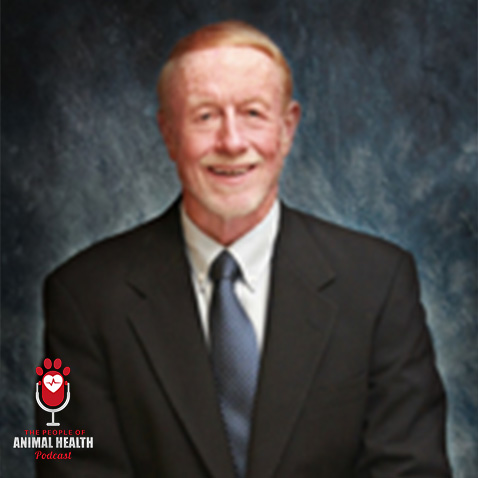
Few veterinarians have witnessed the extraordinary transformation of the Veterinary profession quite like Dr. Thomas L. Godwin. During a career spanning more than five decades, he has practiced mixed animal medicine, co-founded one of the first animal emergency clinics in the United States and the first emergency clinic in Texas, helped establish one of the nation’s earliest referral based emergency hospital models, built successful Veterinary businesses, participated in mergers and acquisitions during the rise of corporate Veterinary medicine, and remained deeply committed to ranching, the profession that first inspired his career. Along the way, he has never lost sight of the values that guided him from childhood, including faith, family, integrity, and a genuine love for both animals and the people who care for them.
During his appearance on The People of Animal Health Podcast with host Stacy Pursell, Dr. Godwin reflected upon a remarkable journey that mirrors many of the most significant developments in modern Veterinary medicine. His story stretches from drought stricken ranch country in North Central Texas to the creation of innovative emergency hospitals that permanently changed the way companion animal emergency care is delivered. Throughout the conversation, he consistently emphasized that many of his greatest opportunities emerged through relationships with trusted colleagues who shared ideas, supported one another, and viewed every success as something that benefited the profession as a whole. Looking back over decades of practice, leadership, and entrepreneurship, Dr. Godwin’s greatest accomplishment may not be any single hospital or business venture, but rather the lasting influence he has had on generations of veterinarians who followed the path he helped create.
Growing Up in a Small Texas Ranching Community
Dr. Godwin’s story begins in Granbury, Texas, a community that looked very different during his childhood than it does today. Although Granbury has since grown into a thriving city, he remembers it as a small agricultural town where everyone knew one another and neighbors measured success less by financial wealth than by character, hard work, and community. “It was a Mayberry, Norman Rockwell type community,” he recalled warmly.
Economically, the town faced significant challenges. Agriculture dominated the local economy, and many families possessed very little in terms of material wealth. Yet Dr. Godwin remembers those years with remarkable affection because the people around him never considered themselves disadvantaged. “We were an impoverished agricultural community,” he explained, “but nobody knew we were impoverished.”
Instead, children enjoyed tremendous freedom, families supported one another, and education remained highly valued despite limited resources. His graduating high school class consisted of only thirty seven students, yet its accomplishments demonstrated that small communities often produce extraordinary people. Among those classmates eventually emerged two veterinarians, a board certified surgeon, multiple scientists with doctoral degrees, and numerous other successful professionals.
“If anybody wanted to go to college,” Dr. Godwin remembered, “they went to college.”
Those experiences left him with a lifelong appreciation for small towns and the opportunities they can provide despite lacking many of the advantages associated with larger communities. Rather than limiting ambition, Granbury encouraged it by surrounding young people with teachers, families, and neighbors who believed success remained attainable through discipline and perseverance. His childhood also unfolded during one of the most devastating droughts in Texas history. Between 1951 and 1956, rain virtually disappeared across much of the state, placing enormous pressure on ranchers and farming communities already operating with limited resources.
“I can remember walking home from school in the seventh grade and experiencing rain for the first time,” he said.
That memory has remained vivid throughout his life because it represented far more than changing weather. After years of relentless drought, the arrival of rain renewed hope for families whose livelihoods depended upon the land. Watching an entire community celebrate something as simple as rainfall taught him valuable lessons about gratitude, resilience, and the close relationship between agriculture and everyday life.
A Marine Veteran Inspired His Future
Although ranching represented Dr. Godwin’s first love, Veterinary medicine eventually became the profession that allowed him to pursue both his personal interests and his long term goals. Ironically, he never viewed becoming a veterinarian as abandoning ranching. Instead, he considered it the ideal pathway toward eventually building the life he wanted. “My main goal in life always was to ranch,” he explained.
The person most responsible for introducing him to Veterinary medicine was his uncle, a Marine Corps veteran whose example left an unforgettable impression on the young Texan. After serving in World War II, his uncle enrolled at Texas A&M University, joined the Corps of Cadets, and graduated as a veterinarian. Watching him return home wearing his military uniform while speaking enthusiastically about both Texas A&M and Veterinary medicine captured Dr. Godwin’s imagination. “He was such an impressive individual,” he remembered.
His uncle represented everything the young Dr. Godwin admired. He had served his country honorably, pursued higher education, entered a respected profession, and returned to rural Texas prepared to serve his community. “Because of him,” Dr. Godwin said, “I decided I wanted to be a veterinarian.”
Just as importantly, he decided he wanted to attend Texas A&M University and become part of the Corps of Cadets, following almost exactly the same path his uncle had traveled only a few years earlier. That decision ultimately established the foundation for a remarkable professional career while allowing him to remain connected to the agricultural heritage he cherished throughout his life.
Entering a Profession on the Verge of Transformation
After graduating from Veterinary school in 1968, Dr. Godwin initially expected to build a career centered primarily on large animal medicine. He envisioned combining Veterinary practice with ranching, an ideal combination for someone raised in rural Texas. Before beginning practice, however, he spent a year in Lexington, Kentucky, completing an equine externship with renowned horse veterinarian Dr. Jim Sautter at Walnut Hall Farms.
At the time, Texas appeared poised for an equine boom unlike anything the state had previously experienced. Strong support existed for legalizing parimutuel wagering, and many industry observers believed the Interstate 45 corridor connecting Houston and Dallas would soon resemble the legendary horse farms surrounding Lexington. “The big emphasis,” Dr. Godwin explained, “was on high end equine medicine and surgery.”
Unfortunately, events unfolded differently than anticipated. Parimutuel wagering failed to gain approval, while a simultaneous collapse within the oil and gas industry devastated many of the wealthy horse owners expected to drive the equine market. Almost overnight, the tremendous opportunities surrounding high end equine practice disappeared.
Rather than viewing that disappointment as a setback, Dr. Godwin embraced another opportunity that unexpectedly proved even more influential. Only two weeks before graduation, he accepted a position within a mixed animal practice in Harris County, Texas. At first glance, the location seemed surprising because he had never intended to practice in a large metropolitan county. Yet Harris County during the late 1960s bore little resemblance to today’s Houston metropolitan area.
“It was an urban county with a million people,” he explained, “but it was also a very rural county.”
The county contained more beef cattle than any other county in Texas while also supporting numerous dairies, racetracks, horse farms, and ranches alongside rapidly growing suburban neighborhoods. For an ambitious mixed animal veterinarian, it offered an extraordinary diversity of professional opportunities. Looking back, Dr. Godwin believes accepting that position required an act of faith because it differed dramatically from the future he originally imagined. Nevertheless, it ultimately became the perfect place to build both his career and many of the lasting professional relationships that would shape the rest of his life.
Witnessing Veterinary Medicine Change Before His Eyes
During his earliest years in practice, Dr. Godwin watched the Veterinary profession evolve at an astonishing pace. Urbanization gradually transformed Harris County as subdivisions replaced ranches, dairies disappeared, and agricultural land gave way to residential development. Those changes fundamentally altered the kinds of patients veterinarians treated and the relationships owners developed with their animals.
When he first entered practice, companion animals often served practical purposes. Dogs helped manage livestock, guarded property, or worked alongside ranchers, while cats primarily controlled rodent populations around farms and barns. Although owners cared deeply for their animals, pets generally were not viewed as members of the family in the same way they often are today. “The emphasis,” Dr. Godwin recalled, “was around dogs that were more working animals.”
As urbanization accelerated, attitudes changed dramatically. Dogs and cats gradually moved from the backyard into the living room, becoming cherished companions whose medical care increasingly resembled that of human family members. Clients sought more sophisticated diagnostics, advanced surgical procedures, specialty referrals, and higher standards of care than previous generations had imagined.
At the same time, traditional mixed animal practice slowly began disappearing. As dairies closed and ranches sold their land for development, veterinarians who once spent mornings treating cattle and afternoons examining household pets found themselves practicing almost exclusively companion animal medicine. “The mixed animal practitioner just basically disappeared,” Dr. Godwin observed.
Rather than resisting those changes, he adapted alongside the profession, recognizing that Veterinary medicine must continually evolve to meet society’s changing expectations.
A Profession Built on Friendship
Although Veterinary medicine itself changed significantly throughout those early decades, one aspect of practice left an especially lasting impression on Dr. Godwin: the remarkable friendships among veterinarians.
On his very first day in practice, his employer, Dr. M. L. Shin, introduced him to neighboring practitioners by taking him to lunch. That simple tradition continued week after week, allowing young veterinarians to develop relationships that extended far beyond professional courtesy. “I would not say that a week went by that we didn’t have lunch with another veterinarian,” Dr. Godwin remembered.
Those friendships expanded through the Greater Houston Large Animal Practitioners Association, where local veterinarians attended continuing education meetings, organized family picnics, leased hunting property together, and even competed in spirited football and volleyball games. Competition between hospitals rarely overshadowed mutual respect because everyone understood that strengthening individual veterinarians ultimately strengthened the profession itself.
One particularly memorable story involved a client well known throughout the local Veterinary community for accumulating unpaid bills while moving from one practice to another. After learning she intended to contact another veterinarian regarding a horse suffering from colic, Dr. Shin patiently gathered detailed information before calmly asking why she still had not paid another colleague thousands of dollars. “The phone slammed down,” Dr. Godwin laughed while recalling the incident.
Although humorous in retrospect, the story reflected something much deeper than unpaid invoices. Veterinarians genuinely looked after one another, sharing information, supporting colleagues, and maintaining relationships built upon trust rather than competition.
Those close friendships would soon make possible one of the most important innovations in modern Veterinary medicine.
Helping Create Modern Veterinary Emergency Medicine
The close professional relationships Dr. Tom Godwin enjoyed throughout the Houston Veterinary community soon led to an idea that would permanently change companion animal medicine in Texas. During the late 1960s and early 1970s, emergency Veterinary care remained extremely limited. Individual practitioners rotated after hours responsibilities, often interrupting family dinners, holidays, vacations, and weekends to answer emergency calls from clients. Although everyone accepted that arrangement as part of the profession, it became increasingly difficult to sustain as companion animal medicine grew more sophisticated and client expectations continued rising.
Rather than accepting the situation as inevitable, several Houston veterinarians began discussing whether a dedicated emergency hospital might better serve both pet owners and practitioners. At the time, very few examples existed anywhere in the country. The concept itself seemed almost revolutionary because Veterinary medicine had traditionally centered around independently owned practices providing virtually every service their clients required.
“We started talking about it,” Dr. Godwin recalled, “and finally decided we ought to give it a try.”
The result became one of the first animal emergency clinics established in the United States and the very first in Texas. Instead of competing against local veterinarians, the hospital existed specifically to support them by providing overnight, weekend, and holiday emergency services before returning patients to their regular veterinarians for continuing care. That referral philosophy, now considered standard throughout the profession, represented a remarkably innovative concept at the time.
Dr. Godwin believes the clinic succeeded because it was founded upon trust rather than competition. Referring veterinarians knew their patients would return the following morning, while pet owners gained access to dedicated emergency care whenever their regular hospital was closed. Everyone benefited because the system strengthened relationships instead of replacing them. “It was really a cooperative effort,” he explained, emphasizing that the emergency clinic belonged to the Veterinary community rather than any individual practice.
As emergency caseloads increased, the hospital gradually evolved into something even more influential. Specialists began joining the organization, allowing the clinic to expand beyond emergency medicine into advanced referral services that many individual practices could not realistically provide themselves. Once again, Dr. Godwin found himself participating in a transformation that would eventually become commonplace throughout Veterinary medicine.
“We started bringing specialists into the practice,” he said. “That really changed everything.”
Instead of forcing practitioners to refer complicated cases hundreds of miles away, local veterinarians suddenly had access to advanced surgical, medical, and diagnostic expertise within their own community. That collaboration strengthened patient care while preserving the relationship between family veterinarians and their clients, demonstrating that referral medicine and primary care could complement one another rather than compete.
Building Businesses Through Relationships
Although Dr. Godwin remained passionate about clinical practice, his entrepreneurial interests gradually expanded beyond the examination room. After helping establish the emergency hospital, he became involved with ProVet, a Veterinary buying group created to help independently owned practices strengthen their purchasing power while improving operational efficiency. Once again, the underlying philosophy centered on collaboration because independent veterinarians often achieved far greater success by working together than by attempting to solve every challenge individually.
Reflecting on those years, Dr. Godwin observed that the Veterinary profession entered a period of remarkable business evolution. Independent hospitals continued thriving, yet larger organizations also began recognizing the long term potential of Veterinary medicine. Corporate ownership, mergers, acquisitions, and practice consolidation gradually reshaped the business landscape, creating opportunities that previous generations of veterinarians had never considered.
His work eventually led him to Pet’s Choice, where he participated directly in acquisitions during the early years of corporate Veterinary medicine. Watching practices join larger organizations provided valuable insight into both the opportunities and challenges associated with consolidation. While financial resources and operational support increased, maintaining the personal relationships that had traditionally defined Veterinary practice remained equally important.
Throughout those transitions, Dr. Godwin consistently emphasized that successful business decisions begin with people rather than numbers. “You build relationships first,” he explained. “The business follows.”
That perspective had guided every major chapter of his career, from founding the emergency clinic alongside trusted colleagues to helping practices navigate changing business environments. Financial success certainly mattered, but long term success depended upon integrity, mutual respect, and maintaining commitments to both clients and fellow veterinarians.
He also reflected on another difficult period that shaped both his career and the Veterinary profession throughout Texas: the collapse of the oil industry during the 1980s.
As oil prices fell dramatically, many ranchers, horse owners, and businesses experienced severe financial hardship. Veterinary practices inevitably felt those effects because clients facing economic uncertainty often postponed nonessential services or reduced discretionary spending on animal care. Although challenging, those years reinforced another lesson Dr. Godwin never forgot. Economic cycles inevitably rise and fall, but practices built upon strong client relationships and responsible financial management remain remarkably resilient over time.
Ranching, Faith, and a Life Well Lived
Despite his many professional accomplishments, Dr. Godwin never abandoned the passion that first inspired his interest in Veterinary medicine: ranching.
Throughout his career, he continued owning and managing ranch property in both Texas and Colorado, maintaining a close connection to the agricultural lifestyle he loved as a child. Those experiences provided balance amid demanding professional responsibilities while reminding him why he entered Veterinary medicine in the first place. Working cattle, improving pastures, and spending time outdoors offered opportunities to reflect away from boardrooms, business meetings, and Veterinary hospitals. Although his career eventually expanded far beyond traditional rural practice, ranching remained an important part of his identity.
Equally important has been his Christian faith, which he discussed openly during the podcast. Throughout decades of professional success, business challenges, and personal milestones, Dr. Godwin believes faith has provided the foundation upon which every other aspect of his life has been built. “My faith has always guided me,” he explained, describing it as the constant source of perspective through changing circumstances.
Rather than separating personal values from professional leadership, he believes integrity, honesty, humility, and compassion should remain visible in every business decision and every professional relationship. Those principles influenced the way he treated employees, collaborated with colleagues, served clients, and approached opportunities throughout his career.
Advice for the Next Generation
Looking toward the future, Dr. Godwin expressed tremendous optimism about Veterinary medicine while recognizing that today’s graduates enter a profession far different from the one he joined in 1968. Technology has transformed diagnostics, specialty medicine has expanded dramatically, corporate ownership has become increasingly common, and companion animals occupy a much more central role within modern families. Despite those changes, he believes the profession’s fundamental purpose remains exactly the same: veterinarians exist to serve. Whether serving animals, clients, colleagues, or communities, success ultimately depends upon maintaining that spirit of service while continuing to learn throughout one’s career.
He also encouraged young veterinarians to embrace opportunities they may not initially anticipate. Looking back over more than fifty years, many of his greatest accomplishments emerged from conversations, friendships, and unexpected invitations rather than carefully orchestrated career plans. Had he declined the opportunity to help establish an emergency clinic, participate in business ventures, or pursue entrepreneurial opportunities, much of his remarkable career might never have unfolded. “Don’t be afraid to try something new,” he advised.
Just as importantly, he encouraged younger professionals to invest time building relationships throughout the Veterinary community because colleagues often become lifelong friends, mentors, and collaborators.
“The friendships are one of the greatest blessings,” he reflected.
A Legacy of Innovation and Service
By the conclusion of his conversation with Stacy Pursell, Dr. Tom Godwin had shared far more than the story of an accomplished veterinarian. His journey captured the extraordinary evolution of modern Veterinary medicine itself, beginning with mixed animal practice in rural Texas and extending through the birth of emergency medicine, specialty referral hospitals, practice management innovation, corporate consolidation, and entrepreneurial leadership.
Yet despite participating in so many historic developments, Dr. Godwin never portrayed himself as someone chasing innovation simply for its own sake. Every new venture emerged because he recognized opportunities to serve both animals and the Veterinary profession more effectively. The emergency clinic improved life for practitioners while ensuring pets received timely care. Referral medicine strengthened relationships between specialists and family veterinarians. Business organizations helped independent practices become stronger and more sustainable. Throughout each chapter, his focus remained remarkably consistent: serve others well.
Looking back over decades of professional accomplishment, Dr. Godwin expressed deep gratitude for the colleagues, mentors, employees, clients, and friends who shared the journey alongside him. Veterinary medicine, he believes, has always been at its best when professionals work together rather than apart, sharing knowledge freely while supporting one another through both successes and challenges.
His appearance on The People of Animal Health Podcast offered listeners an inspiring reminder that meaningful careers are rarely measured only by financial success or professional titles. Instead, lasting influence comes from improving the profession for those who follow. Through his leadership, entrepreneurial vision, unwavering integrity, and commitment to collaboration, Dr. Tom Godwin has done precisely that, leaving an enduring legacy that continues shaping Veterinary medicine across Texas and throughout the broader Animal Health industry.
Listen to Dr. Tom Godwin’s episode on The People of Animal Health Podcast with Stacy Pursell!