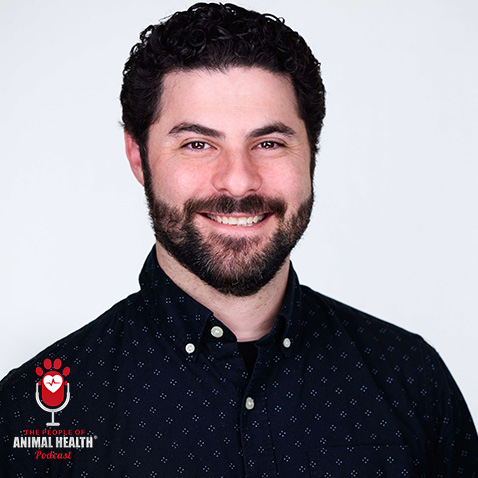
Every veterinarian has a unique story about how they entered the profession, but few careers evolve as broadly as that of Dr. Jason Epstein. During his appearance on The People of Animal Health Podcast with host Stacy Pursell, Dr. Epstein reflected on the experiences that shaped him as a clinician, mentor, executive leader, and innovator. Throughout the conversation, he shared lessons about leadership, patient care, organizational culture, and the future of Veterinary medicine, offering valuable perspectives for veterinarians, practice owners, students, and Animal Health professionals alike.
Dr. Epstein’s career has taken him across multiple states, through private practice, executive leadership, and now into one of the industry’s most ambitious feline focused healthcare initiatives. Yet despite those diverse experiences, one theme remained remarkably consistent throughout the discussion. His passion has always centered on helping people while improving the lives of animals.
Discovering a Passion for Veterinary Medicine
For many veterinarians, the decision to pursue the profession develops gradually over time. For Dr. Epstein, however, the spark arrived much earlier.
As a twelve year old growing up in Charleston, South Carolina, he admired his family’s veterinarian, who happened to be a graduate of the University of Georgia. Already a lifelong Georgia fan, Dr. Epstein eagerly accepted the opportunity to shadow him for a day. That experience permanently changed the course of his life.
Walking into the clinic, he immediately encountered an orthopedic surgery in progress. While most middle school students might have been overwhelmed by the sight of an open knee and surgical instruments, Dr. Epstein found himself fascinated.
“I walked into his clinic, and they were in the middle of what I now know to be a medial patellar luxation surgery,” he recalled. “I was like, ‘That’s super cool. I want to do this.'”
Although he explored other possibilities over the years, Veterinary medicine continually drew him back. More than the medicine itself, he found himself attracted to the profession’s culture and purpose. Rather than simply becoming a career choice, Veterinary medicine became the environment where he believed he could make the greatest difference.
Building a Career From the Ground Up
Following graduation from the University of Georgia College of Veterinary Medicine, Dr. Epstein pursued another longtime dream by relocating to Colorado. Instead of waiting for opportunities to appear, he created them himself.
He mailed letters and resumes to practices throughout Colorado Springs while still completing his final months of Veterinary school. Eventually, one small practice extended an offer several months before graduation, allowing him to tailor the remainder of his clinical rotations around the procedures and cases he would actually encounter after entering practice. That practical preparation proved invaluable as he transitioned into general practice.
Working alongside two experienced veterinarians gave him more than clinical instruction. It also introduced him to leadership, client communication, and the realities of managing relationships with technicians, clients, and colleagues. Looking back, Dr. Epstein described those years as the time when he truly learned how to become both a veterinarian and a leader.
Learning That Veterinary Medicine is Really About People
Over the course of his career, Dr. Epstein has practiced in Colorado, Tennessee, Florida, Texas, South Carolina, and New York. Those experiences exposed him to a wide variety of clients, practice environments, and regional cultures. Surprisingly, what stood out most was not how different pet owners were, but how similar they remained.
“I’ve found that every single patient and every single client is unique and needs to be treated as such,” he explained. “You can’t be a great veterinarian unless you truly find a way to care about the person in the room.”
That observation reflects one of the central messages of the interview. Many people enter Veterinary medicine because of their love for animals. While that passion remains essential, Dr. Epstein believes exceptional veterinarians also develop genuine empathy for the people who accompany those animals.
Whether practicing in Greenville, Knoxville, Dallas, or Colorado Springs, he found that every client brought different expectations, financial circumstances, and emotional connections to their pets.
Some viewed their pets as children. Others approached Veterinary care much more pragmatically. Still others would spare no expense to provide treatment. Recognizing those differences allows veterinarians to tailor communication, recommendations, and care plans to each individual family instead of relying on assumptions.
Growing into Executive Leadership
Dr. Epstein’s leadership journey eventually led him to My Pets Wellness, where he served as Executive Medical Director during an ambitious period of organizational growth. Expanding from three practices into a multistate organization required much more than hiring additional veterinarians.
Every decision required consistency. Equipment needed standardization so training remained uniform. Clinical expectations needed alignment without making doctors feel micromanaged. Culture needed protection as new hospitals opened and additional team members joined the organization. Recruiting also became increasingly important.
Fortunately, Dr. Epstein credited the company’s recruiting and talent acquisition teams with identifying doctors who genuinely embraced the organization’s mission and values. Finding veterinarians who fit the culture proved much easier than finding clinical support staff who shared both the financial and emotional commitment necessary for long term success.
Perhaps the greatest leadership challenge involved balancing compassionate patient care with responsible business management. Veterinarians naturally want to help every patient who enters the hospital. However, practices must also remain financially healthy enough to continue serving their communities while supporting employees and their families.
“We care about our patients, we care about our clients,” Dr. Epstein explained, “but we also have to run a business and pay for people’s healthcare and paychecks.”
That balance requires thoughtful leadership rather than choosing one priority over another.
Developing Future Veterinary Leaders
Throughout his career, Dr. Epstein has mentored more than twenty veterinarians while also helping develop technician training programs. His philosophy centers on understanding individuals rather than forcing everyone into identical career paths.
“I think finding a way to learn someone’s passion and encourage them to grow and not force them into a box,” he explained when discussing leadership development.
He believes great leaders create environments where mistakes become learning opportunities instead of permanent failures. Veterinary medicine remains an emotionally demanding profession, making resilience especially important.
Rather than pretending leaders possess all the answers, Dr. Epstein encourages vulnerability, transparency, and accountability. Sharing personal mistakes demonstrates authenticity while giving younger veterinarians permission to continue growing.
He also emphasized that veterinarians naturally appreciate evidence based discussions. When disagreements arise, presenting data encourages productive conversations instead of emotional debates. That combination of humility, openness, and scientific reasoning has become a hallmark of Dr. Epstein’s leadership philosophy.
Finding Passion in Overlooked Areas
Among Dr. Epstein’s many clinical interests, two stand out as particularly meaningful. The first is dentistry. Describing himself as “a proud tooth nerd,” he acknowledged that dentistry may not always be glamorous, but few areas of Veterinary medicine produce such dramatic improvements in quality of life.
One memorable patient permanently changed his perspective. A cat suffering from severe resorptive lesions finally underwent a long delayed dental procedure after kidney disease complicated treatment decisions. Two weeks later, the owners returned with an emotional observation.
“I didn’t know I lost my cat,” they told him, “but I have my cat back.”
For Dr. Epstein, that single experience demonstrated how silently chronic oral pain diminishes quality of life and how profoundly dentistry can restore comfort, behavior, and the bond between pets and their families. It became one of the defining moments of his clinical career.
Looking Beyond Treatment to Quality of Life
While dentistry became one of Dr. Jason Epstein’s favorite clinical disciplines, another area developed into an equally important professional passion: palliative care.
Unlike traditional treatment plans that focus primarily on diagnosing and curing disease, palliative medicine shifts attention toward maximizing comfort and quality of life when cure is no longer the primary goal. Dr. Epstein believes this transition deserves far more intentional discussion within Veterinary medicine.
He explained that every patient eventually reaches a point where the family’s priorities begin to change. Earlier in life, the objective is identifying disease, treating illness, and restoring health. Eventually, however, the conversation evolves into something different.
“I don’t really care if this is the best test to find the problem,” he explained. “I want this kiddo to feel better every day, to be a ten out of ten quality day for as many days as I’m going to have left.”
Rather than viewing that transition as surrender, Dr. Epstein considers it one of the most compassionate services veterinarians can provide.
Helping owners understand that comfort can become the primary medical objective often relieves tremendous emotional pressure. Families stop chasing every possible diagnosis and begin focusing on creating meaningful experiences with the time they have remaining. In Dr. Epstein’s view, strengthening the bond between pets and their caregivers during this stage represents some of the profession’s most meaningful work.
Becoming a Better Business Leader
Like many veterinarians, Dr. Epstein admitted that business leadership did not come naturally.
“I stunk at it for a long time,” he said candidly when discussing the transition from clinician to executive.
That honesty reflects another recurring theme throughout the interview. Effective leaders are willing to acknowledge what they do not know before attempting to improve.
Dr. Epstein believes Veterinary education prepares graduates exceptionally well for medicine but leaves significant opportunities for additional instruction in business fundamentals. Understanding profit margins, financial statements, inventory management, and organizational economics becomes increasingly important as veterinarians assume leadership positions.
He would welcome additional coursework covering financial concepts such as margins, cost management, and practice performance long before graduates enter management positions. More importantly, he encourages veterinarians to think like business owners rather than simply clinicians.
Revenue alone never tells the entire story. Understanding profitability, responsible discounting, and the financial implications of everyday decisions allows veterinarians to balance excellent patient care with long term organizational health. That balance ultimately protects employees, clients, and patients alike.
Communicating in Ways Clients Understand
One of Dr. Epstein’s greatest strengths involves translating complicated medical concepts into language clients immediately understand. Rather than relying exclusively on medical terminology, he frequently compares Veterinary conditions to familiar human experiences.
When discussing periodontal disease, for example, he often places photographs of diseased human mouths beside comparable animal cases. Suddenly clients recognize the seriousness of oral disease in ways that dental grading charts alone rarely accomplish.
Similarly, when explaining kidney disease, Dr. Epstein compares elevated creatinine levels to the physical effects of severe dehydration and a significant hangover. That comparison instantly creates empathy. Owners begin understanding why appetite stimulants, fluid therapy, and anti nausea medications become so important because they can personally relate to how miserable dehydration feels.
For Dr. Epstein, education succeeds when clients emotionally connect with their pet’s experience. Once owners truly understand what their pets are feeling, compliance naturally improves.
Protecting Culture Above Everything Else
Few topics generated more passion during the interview than organizational culture. Dr. Epstein credits many successful workplace initiatives to outstanding colleagues who specialized in organizational development, but he also shared several leadership principles that have guided his own career.
Among the most important involves creating workplaces where every employee feels respected. Whether someone serves as a receptionist, technician, kennel assistant, or veterinarian, every individual deserves to feel valued. Favoritism, bullying, and disrespect slowly erode organizational culture regardless of how financially productive individual employees may be.
“We had a zero tolerance policy for bullying,” Dr. Epstein explained. “We let go of some great people because of one bad day, but standing up for what is right makes the world of difference to the rest of your team.”
That philosophy also extends to difficult personnel decisions. When asked about highly productive employees whose behavior damages team morale, Dr. Epstein offered remarkably direct advice. Practice owners already know the answer. They simply must decide whether protecting short term revenue outweighs preserving long term culture. His own preference remains clear: “I would not want to be associated with an organization that prioritizes profits over people.”
Building a Better Future for Cats
Perhaps the most exciting chapter of Dr. Epstein’s career is only beginning. As a member of the founding leadership team at CatsOnly Veterinary Services, he hopes to transform how feline medicine is delivered throughout the United States. Rather than simply creating another cat friendly practice, the organization intends to build an entire healthcare system specifically designed around feline needs.
Everything receives careful consideration:
- Architecture
- Hospital workflow
- Communication
- Interior design
- Color selection
- Client interactions
Every decision passes through what Dr. Epstein calls “the lens of the cat.” While feline organizations have made significant progress improving standards of care, he believes cats deserve an entirely dedicated healthcare model rather than adaptations of facilities originally designed around dogs. The first hospitals are planned for the Denver area before expanding nationally, but the long term vision reaches much further.
“We’re looking at every decision we make with intentionality through the lens of the cat,” he explained.
Looking Toward Veterinary Medicine’s Future
Dr. Epstein also shared several predictions about where Veterinary medicine may be headed during the coming decades. One involves increasing specialization not simply by discipline but by species. After years of developing specialty referral services, he believes Veterinary medicine may eventually embrace hospitals dedicated entirely to cats, dogs, or mixed companion animals. He refers to this concept as speciation.
Just as human medicine separates pediatricians, geriatric specialists, and numerous other physicians, he believes companion animals may eventually benefit from similarly focused care models. Technology also continues transforming clinical practice. Point of care ultrasound, artificial intelligence, electronic medical records, and diagnostic advancements all promise earlier diagnosis and improved efficiency.
Dr. Epstein described ultrasound becoming “an extension of the stethoscope,” reflecting how rapidly advanced diagnostics are becoming standard tools within everyday practice.
He also acknowledged that emerging midlevel practitioners will likely reshape Veterinary medicine. Rather than resisting inevitable change, he encourages thoughtful discussion about how these new roles can expand access to care while strengthening the contributions of licensed Veterinary technicians.
Leadership Begins With Accountability
When asked about the greatest lesson he has learned throughout his career, Dr. Epstein immediately reflected on his own transition from practicing veterinarian to organizational leader. Early in his leadership journey, he occasionally positioned himself between clinical teams and executive leadership, unintentionally creating an “us versus them” mentality. Over time, he realized effective leaders cannot distance themselves from organizational decisions. They must own them.
That realization ultimately shaped what has become one of his defining leadership principles. “Accountability starts with I,” said Epstein.
Those four words summarize his entire philosophy. Before blaming employees, leaders should ask themselves several questions:
- Did I provide the necessary tools?
- Did I establish clear expectations?
- Did I offer appropriate training?
- Did I verify understanding?
If those responsibilities were neglected, leadership shares responsibility for the outcome. That mindset replaces blame with problem solving while creating healthier organizational cultures built upon continuous improvement instead of fear.
A Career Built on Purpose
As his conversation with Stacy Pursell concluded, Dr. Jason Epstein left listeners with far more than career advice. He demonstrated how curiosity, humility, compassion, and accountability can shape every stage of a Veterinary career. Whether discussing dentistry, palliative medicine, organizational leadership, business management, or the future of feline healthcare, his perspectives consistently returned to one central belief: Veterinary medicine is ultimately about improving lives.
Sometimes that means restoring a cat’s ability to play after years of chronic dental pain, sometimes it means helping a grieving family enjoy one more meaningful season with an aging companion, and sometimes it means mentoring young veterinarians or protecting workplace culture by making difficult leadership decisions.
Whatever the circumstance, Dr. Epstein believes thoughtful leadership begins with empathy, continues through intentional action, and succeeds by never losing sight of the people and animals the profession exists to serve. His career stands as an outstanding example of how one veterinarian can influence not only individual patients but also colleagues, organizations, and the future direction of Veterinary medicine itself.
Listen to Dr. Jason Epstein’s episode on The People of Animal Health Podcast with Stacy Pursell!