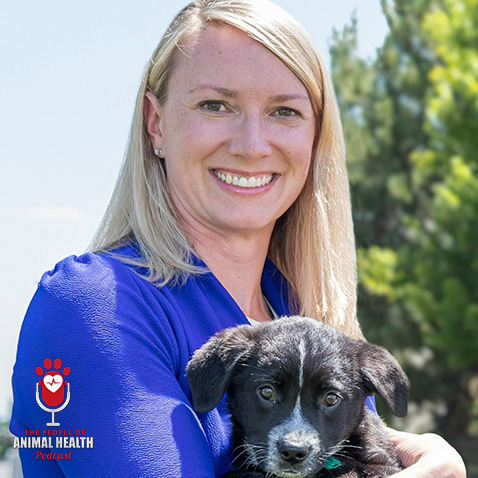
For Dr. Karen Shenoy, a career in Veterinary medicine never resulted from a single defining moment. Instead, it grew naturally from a childhood immersed in nature, inspired by parents who nurtured both her love of animals and her curiosity about science. Those early influences eventually led her from the lakes and forests of Minnesota into Veterinary school, wildlife rehabilitation, companion animal practice, and ultimately one of the profession’s most influential leadership positions as Chief Veterinary Officer for Hill’s Pet Nutrition in the United States.
During her appearance on The People of Animal Health Podcast with host Stacy Pursell, Dr. Shenoy reflected upon a career that demonstrates how diverse experiences often prepare leaders for opportunities they never imagined. Although she once expected to spend her professional life working exclusively with wildlife, she discovered that remaining open to new possibilities could lead to an even greater opportunity to influence the Veterinary profession. Today, she combines clinical experience, business leadership, mentorship, advocacy, and innovation while serving as a trusted voice for veterinarians across the country.
Throughout the conversation, one characteristic consistently emerged as the foundation of her success: curiosity.
Whether exploring the woods as a child, shadowing at a neighborhood Veterinary clinic, rehabilitating injured wildlife, or helping shape the future of Veterinary medicine through industry leadership, Dr. Shenoy has continually approached each new experience with an eagerness to learn, ask questions, and embrace opportunities that pushed her beyond her comfort zone. That willingness to remain curious has shaped every chapter of her remarkable professional journey.
Growing Up in Minnesota’s Great Outdoors
Dr. Shenoy grew up in Stillwater, Minnesota, a picturesque community situated along the St. Croix River near the Wisconsin border. Like many Minnesotans, she spent much of her childhood outdoors surrounded by lakes, forests, and wildlife, an environment that naturally encouraged exploration and discovery. “I always joke I only have an accent when I say the word Minnesota,” she laughed while introducing her hometown.
Her upbringing reflected what she described as a quintessential Minnesota childhood. The family lived on a wooded property with a nearby lake, providing endless opportunities to observe wildlife, explore nature, and develop an appreciation for the remarkable diversity of animals living just beyond her backyard.
“I spent an awful lot of time outside in nature around animals,” she recalled. Looking back, she now recognizes how those experiences quietly established the foundation for everything that followed professionally.
The influences within her own family also pointed naturally toward Veterinary medicine. Her mother possessed an obvious love for animals, especially cats, and the household almost always included several feline family members. Meanwhile, her father worked as a chemical engineer whose career revolved around analytical thinking, scientific reasoning, and solving complex problems.
“My mom especially was a cat person,” Dr. Shenoy explained. “And then my dad was an engineer… really into the science and problem solving.”
When she reflects upon those two influences today, she sees Veterinary medicine almost as the inevitable intersection between her parents’ interests. “I almost feel like I was destined to be a vet,” she said.
Her mother’s compassion for animals combined seamlessly with her father’s scientific mindset, creating exactly the combination that Veterinary medicine requires every day. Caring for patients demands empathy, while diagnosing disease depends upon disciplined scientific thinking. Even before she understood the profession itself, those qualities were already becoming part of her own personality.
A Young Naturalist Discovers Her Calling
Although Dr. Shenoy eventually became a veterinarian, her earliest professional aspirations actually centered upon wildlife biology. As a child, she developed an extraordinary fascination with animals of every kind, eagerly learning everything she possibly could about zoology, ecology, and conservation. “I was even just such a nerdy child,” she admitted with a smile.
Her enthusiasm extended well beyond ordinary childhood curiosity. She joined organizations including the American Association of Zookeepers and the Minnesota Herpetological Society, immersing herself in educational opportunities that allowed her to deepen her understanding of reptiles, amphibians, and wildlife. “I was really into frogs especially,” she remembered.
Those interests reflected something much deeper than a simple hobby. She genuinely loved understanding how animals lived, adapted, and interacted with their environments. Whether reading books, attending educational programs, or simply exploring the outdoors, she constantly sought opportunities to expand her knowledge.
That passion ultimately led her to participate in an Explorers Program during her later elementary school years, an experience designed to expose students to different careers involving animals and agriculture. Looking back, she admits she remembers very little about most of the program’s activities.
One experience, however, changed everything. Participants visited a local Veterinary hospital. “I can’t even tell you any other experience I had as part of that program,” she said. “But when I got into a vet clinic… I was just hooked instantly.”
For the first time, she saw a profession that combined everything she loved.
- Animals
- Science
- Medicine
- Problem solving
- Helping others
Rather than studying wildlife from a distance, veterinarians actively improved animals’ lives while building meaningful relationships with their owners. Almost immediately, she recognized that Veterinary medicine offered exactly the combination she had been searching for without realizing it.
The Experience That Confirmed Her Future
Unlike many children whose career interests change repeatedly throughout adolescence, Dr. Shenoy wasted little time pursuing additional exposure to Veterinary medicine after discovering the profession. She approached the owner of the clinic she had visited and asked a remarkably bold question for an admittedly shy young student. Could she come back during the summer? The veterinarian enthusiastically agreed.
Approximately once each week, she returned to observe appointments, surgeries, and daily practice operations, quietly absorbing everything she could about the profession. “I got to go just hang out as this very awkward shy kid,” she remembered.
Those visits became an informal mentorship that permanently shaped her future. Watching experienced veterinarians interact with clients, diagnose illnesses, and perform surgery confirmed what she already suspected. She had found her calling. One particular experience remains especially vivid decades later. During one of her visits, she observed the veterinarian perform a limb amputation. As blood sprayed across the room, she watched with complete fascination rather than discomfort. “I thought it was the coolest thing ever,” she laughed.
Excited, she rushed home eager to tell her parents every detail of the procedure. Her father, considerably more squeamish than his daughter, reacted somewhat differently. “My dad especially was squeamish and just never appreciated those kinds of stories,” she said.
Even so, her parents immediately recognized something important. Their daughter had found the profession she was meant to pursue. From that point forward, neither she nor her family seriously questioned her future career direction again. Veterinary medicine had become more than an interest. It had become a goal.
Discovering the Many Dimensions of Veterinary Medicine
After completing Veterinary school, Dr. Shenoy initially remained focused on wildlife medicine, the area that had inspired many of her earliest professional ambitions. She worked in wildlife rehabilitation, helping injured animals recover whenever possible before returning them to their natural habitats. Those experiences reinforced something she continues emphasizing today. The extraordinary power of the human animal bond.
Although wildlife patients often spent only brief periods under her care, she repeatedly encountered people willing to devote enormous effort to rescuing injured animals many would simply overlook. “I would sometimes think a little bit philosophically about the work that we were doing,” she reflected.
Was saving a single injured songbird or rabbit truly significant within the broader ecosystem? Again and again, she concluded that it absolutely was. People cared enough to stop, rescue an injured animal, transport it for treatment, and hope for its recovery. Those acts of compassion reminded her that relationships between humans and animals extend far beyond companion pets.
“We always had the approach that if somebody cared enough to bring an animal in, we were willing to help,” she said.
Eventually, her professional journey expanded into companion animal practice, where she experienced the human animal bond from yet another perspective. Helping families care for beloved dogs and cats demonstrated how profoundly Veterinary medicine influences not only animal health but also human wellbeing. Those experiences ultimately became invaluable preparation for a very different opportunity that emerged in 2008: Joining Hill’s Pet Nutrition.
Unlike many veterinarians who initially envision careers within industry, Dr. Shenoy admitted that she never seriously considered that possibility while in Veterinary school. “A role in the industry wasn’t even really something I knew about,” she explained.
Nevertheless, the opportunity allowed her to continue serving the Veterinary profession while influencing patient care on a much broader scale. During the years that followed, she served in numerous commercial and professional roles, including seven years working directly with Veterinary hospitals throughout the country. “I’ve been in hundreds of Veterinary clinics,” she said.
Those countless conversations with veterinarians, technicians, students, and practice teams shaped the leadership philosophy she continues carrying into her current role.
No matter how high someone rises within an organization, they must never lose sight of what daily life actually looks like for the Veterinary professionals they serve. As she prepared to become Chief Veterinary Officer for Hill’s US, trusted colleagues offered advice that she has never forgotten: “Karen, it’s really important that you stay really grounded in that day to day perspective.”
For Dr. Karen Shenoy, remaining connected to practicing veterinarians has become much more than professional advice. It has become one of the defining principles of her leadership.
Leading Veterinary Innovation at Hill’s Pet Nutrition
When Dr. Karen Shenoy joined Hill’s Pet Nutrition in 2008, she entered a side of the Veterinary profession that many students never realize exists. Until that point, nearly all of her experience had centered on clinical medicine, wildlife rehabilitation, and direct patient care. Like countless veterinarians, she viewed industry primarily from the perspective of someone recommending products rather than helping create the programs, research, and educational initiatives supporting Veterinary teams across the country.
“I didn’t even know industry was really an option,” she admitted.
What attracted her was the opportunity to improve the lives of animals on a much broader scale while continuing to support the Veterinary profession she loved. During the years that followed, she served in numerous commercial and professional positions that allowed her to work directly with Veterinary hospitals, universities, and practice teams throughout the United States. Those experiences exposed her to hundreds of clinics, each with its own culture, challenges, and approach to patient care.
“I’ve been in hundreds of Veterinary clinics,” she explained, emphasizing how those visits shaped her understanding of the profession far beyond what any single clinical position could have provided. Every hospital offered another opportunity to learn how veterinarians approached medicine, communicated with clients, built successful teams, and navigated the rapidly changing Animal Health landscape. Rather than distancing her from clinical practice, her work at Hill’s strengthened her appreciation for the extraordinary commitment demonstrated by Veterinary professionals every day.
Eventually, those experiences led her to become Chief Veterinary Officer for Hill’s Pet Nutrition in the United States, a role that combines scientific leadership, professional advocacy, strategic planning, and collaboration with organizations throughout the Animal Health industry. As she assumed that position, trusted colleagues offered advice that continues guiding her leadership every day.
“They said, ‘Karen, it’s really important that you stay grounded in what everyday practice looks like.'”
That perspective has remained central to her philosophy because she believes meaningful leadership begins with understanding the realities facing practicing veterinarians rather than viewing the profession solely through executive decision making.
Supporting Shelters and Strengthening the Human Animal Bond
Among the initiatives Dr. Shenoy discussed most passionately during her conversation with Stacy Pursell was Hill’s ongoing commitment to animal shelters and the remarkable work performed every day by shelter professionals across North America. Through nutrition programs, educational resources, research, and industry collaboration, Hill’s has invested heavily in helping shelters improve both animal welfare and adoption outcomes.
One recent example involved the company’s State of Shelter Pet Adoption Report, which examined changing adoption trends while identifying opportunities to help more animals find permanent homes. Dr. Shenoy believes those efforts extend far beyond simply collecting data because understanding adoption patterns allows organizations throughout the Animal Health industry to make better decisions that ultimately benefit both animals and families.
“We really wanted to understand what was happening,” she explained, describing the motivation behind the research. Better information creates better solutions, particularly as shelters continue navigating changing economic conditions, fluctuating adoption rates, and evolving community needs.
Her enthusiasm for shelter medicine also reflects something deeply personal. Throughout her career, Dr. Shenoy has repeatedly witnessed the extraordinary relationship between people and animals. Whether working with wildlife, companion animals, or shelter pets, she has consistently been inspired by the compassion people demonstrate toward creatures unable to speak for themselves.
One memorable example involved an injured opossum whose unusual orange coloring made the animal appear almost mythical. Rather than dismissing the injured wildlife, compassionate individuals took the time to rescue it and ensure it received appropriate care.
“I still think about that orange opossum,” she said with a smile.
To many people, it may have appeared to be only a single injured wild animal. To Dr. Shenoy, however, the story represented something much larger. It demonstrated humanity’s willingness to care for vulnerable animals regardless of species, appearance, or circumstance.
That same compassion, she believes, lies at the heart of Veterinary medicine itself.
Mentorship, Diversity, and the Future of Veterinary Medicine
Although Dr. Shenoy has built an impressive career across clinical practice, industry leadership, organized Veterinary medicine, and professional advocacy, she readily acknowledges that none of those accomplishments occurred in isolation. Throughout the interview, she repeatedly credited mentors, colleagues, and supportive leaders who encouraged her to pursue opportunities she might otherwise have overlooked.
“I’ve had incredible mentors throughout my career,” she reflected.
Those relationships reinforced another conviction that now shapes her own leadership. Every experienced veterinarian carries a responsibility to encourage the next generation by sharing knowledge, creating opportunities, and helping younger professionals recognize strengths they may not yet see in themselves.
Her commitment to mentorship naturally extends into her work supporting diversity and inclusion throughout the Veterinary profession. Through organizations including the Diversified Veterinary Medicine Coalition and the Veterinary Innovation Council, she has helped encourage conversations about broadening access to Veterinary careers while ensuring future leaders reflect the communities and clients they ultimately serve.
Innovation also remains one of her greatest passions. Rather than viewing innovation solely as technological advancement, she believes it often begins with curiosity, collaboration, and a willingness to challenge long established assumptions. “We have to continue asking different questions,” she explained.
That mindset encourages Veterinary professionals to remain lifelong learners while embracing new approaches capable of improving patient care, strengthening practice efficiency, and enhancing the wellbeing of Veterinary teams.
Dr. Shenoy also spoke candidly about experiencing imposter syndrome during different stages of her career, an experience familiar to many accomplished professionals. “I don’t know that it ever completely goes away,” she admitted.
Instead of allowing self doubt to become an obstacle, she gradually learned that growth often occurs precisely because opportunities feel slightly uncomfortable. Confidence develops through experience rather than preceding it, making courage an essential leadership characteristic.
Leading With Curiosity and Compassion
Outside her professional responsibilities, Dr. Shenoy maintains habits that help sustain both her energy and perspective. A lifelong competitive swimmer, she continues turning to exercise as an important source of balance despite an increasingly demanding leadership role.
Swimming provides more than physical activity. It creates uninterrupted time for reflection. Many of her best ideas emerge not while sitting behind a desk but while moving steadily through the water, allowing her mind to process challenges without constant interruption. That quiet time has become an important part of maintaining both creativity and resilience.
Her leadership philosophy reflects many of the same principles:
- Stay curious.
- Continue learning.
- Listen carefully.
- Remain grounded.
- Support others generously.
Those ideas surfaced repeatedly throughout the interview because they have consistently guided every stage of her professional journey. Whether working in wildlife rehabilitation, companion animal practice, industry leadership, or organized Veterinary medicine, she has approached each new opportunity with humility and genuine curiosity rather than assuming she already possessed every answer.
When Stacy Pursell asked what advice she would offer her younger self, Dr. Shenoy’s response reflected both wisdom and encouragement: “I would tell myself to trust myself a little bit more.”
Looking back, she realizes many of the opportunities that ultimately shaped her career initially felt intimidating. Yet each challenge expanded her confidence while opening doors she never anticipated when she first entered Veterinary school.
A Career Built on Purpose and Possibility
As her conversation on The People of Animal Health Podcast concluded, Dr. Karen Shenoy left listeners with a powerful reminder that Veterinary medicine offers extraordinary possibilities for those willing to remain curious throughout their careers. Her journey began with childhood afternoons exploring Minnesota’s lakes and forests, evolved through wildlife rehabilitation and companion animal practice, and ultimately expanded into national leadership influencing countless Veterinary professionals across the Animal Health industry.
Despite the impressive scope of her accomplishments, she consistently returned to the same central belief. Veterinary medicine is ultimately about improving lives. Sometimes those lives belong to companion animals, sometimes they belong to wildlife, sometimes they belong to shelter pets waiting for adoption. And sometimes they belong to the veterinarians, technicians, students, and practice teams dedicating themselves every day to caring for those animals.
Her appearance on The People of Animal Health Podcast illustrated that meaningful leadership rarely follows a perfectly planned path. Instead, it develops through curiosity, mentorship, thoughtful collaboration, and the willingness to embrace opportunities that initially seem unexpected. By remaining grounded in the realities of clinical practice while continually looking toward the future of the profession, Dr. Karen Shenoy continues helping shape a stronger, more innovative, and more compassionate future for Veterinary medicine, inspiring the next generation of leaders to pursue careers defined not only by professional achievement but also by lasting service to animals, people, and the Animal Health profession itself.
Listen to Dr. Karen Shenoy’s episode on The People of Animal Health Podcast with Stacy Pursell!